For generations, Christmas and New Year’s in Greece have been shaped by a rich blend of faith, folklore, and heartfelt celebration. From festive feasts and joyful carol singing to symbolic decorations and ancient rituals, the Greek holiday season promises an experience unlike any other. Whether you find yourself among snow-dusted mountains, lively cities, or tranquil seaside villages, you’ll be surrounded by a magical setting where age-old traditions coexist with modern festivities. Below are some of the most distinctive Greek Christmas customs you should not miss.
Kalanda: Traditional Christmas Caroling
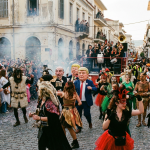
One of the most beloved Greek holiday traditions is kalanda, the singing of Christmas carols. On Christmas Eve, New Year’s Eve, and Epiphany Eve (January 5), children walk through neighborhoods and villages, singing festive songs accompanied by a triangle or drum. These melodies, passed down through centuries, offer wishes of health, abundance, and good fortune.
Homes warmly welcome the young carolers, rewarding them with coins, sweets, or fruit. In smaller towns, families often join in, turning the event into a shared celebration. For visitors, experiencing kalanda—especially in a village setting—offers a genuine glimpse into the warmth of Greek holiday life.
Christopsomo: Christ’s Bread
The preparation of Christopsomo (Christ’s Bread) is a meaningful Christmas Eve tradition across Greece. Baked with care, this slightly sweet bread is often decorated with a cross and symbols representing family blessings, such as wheat, animals, or the home itself. Spiced with cinnamon, cloves, and sometimes orange zest, it reflects gratitude and hope for prosperity in the coming year.
Families gather to bake and share Christopsomo during the Christmas meal, reinforcing the spirit of togetherness. Travelers visiting Greece during the holidays can find it in bakeries and tavernas, where it remains a symbol of faith and abundance.
Karavaki: A Maritime Symbol of Christmas
Although Christmas trees are now widespread, the traditional Greek holiday decoration is the karavaki, a small wooden boat adorned with lights. Rooted in Greece’s deep maritime heritage, this custom honors sailors returning home safely and expresses gratitude for protection at sea.
Illuminated karavakia can be found in island communities, coastal towns, and even city squares, glowing with blue and white lights that echo the colors of the Greek sea.
Vasilopita: The New Year’s Cake
New Year’s Day in Greece is dedicated to Saint Basil (Agios Vasilios), the Greek equivalent of Father Christmas. Families celebrate by cutting Vasilopita, a special cake with a hidden coin known as the flouri. Before serving, the head of the household marks the cake with the sign of the cross and cuts slices dedicated to God, Christ, the Virgin Mary, the home, and then each family member in order of age.
Whoever finds the coin is believed to receive good luck for the entire year. Visitors can enjoy this tradition at family homes, hotels, and festive gatherings across the country.
Fire and Folklore: The Yule Log and the Kalikantzari
In many regions, the Yule Log is burned continuously throughout the twelve days of Christmas (December 25 to January 6). This tradition is believed to ward off the kalikantzari, mischievous goblins from Greek folklore who emerge during this period to cause chaos in households.
Stories of these playful yet troublesome creatures are passed down through generations, adding a sense of mystery and folklore to the season. Families gather around the fire, sharing food, wine, and stories, creating a warm and intimate holiday atmosphere.
Epiphany: The Blessing of the Waters
Greek Christmas celebrations culminate on January 6 with Epiphany (Ta Phota), one of the most significant religious feasts in the country. The day commemorates the baptism of Christ and features the Great Blessing of the Waters.
In coastal towns, lakes, and rivers, a priest throws a cross into the water while volunteers dive in to retrieve it. The swimmer who succeeds receives a special blessing for themselves and their household. This impressive ritual can be witnessed in places such as Piraeus, Thessaloniki, Hydra, and Spetses, accompanied by church bells, hymns, and Epiphany carols sung by children.
Festive Feasting: Greek Christmas Delicacies
Food plays a central role in Greek holiday celebrations. Some traditional treats you should try include:
- Melomakarona – honey-soaked cookies topped with walnuts
- Kourabiedes – buttery almond cookies dusted with powdered sugar
- Roast pork dishes – symbolizing prosperity and abundance
- Baklava – layers of phyllo filled with nuts and syrup
These delicacies are enjoyed alongside local wines, tsipouro, or festive liqueurs, shared with family and friends around beautifully set tables.
Celebrate Christmas in Greece
From glowing karavakia and joyful carolers to ancient rituals, bonfires, and the blessing of the waters, Christmas in Greece is a celebration of light, tradition, and hospitality. Whether you’re strolling through decorated villages, tasting Christopsomo, or experiencing Epiphany by the sea, the festive spirit is both heartfelt and unforgettable.
This holiday season, immerse yourself in timeless customs, breathtaking landscapes, and warm Greek hospitality. Greece is ready to welcome you and share its Christmas magic.
Experience the traditions, flavors, and wonders of a Greek Christmas—plan your festive journey today and create memories to last a lifetime.